July 11, 2026
READERS WRITE: THE 100TH BIRTHDAY ISSUE
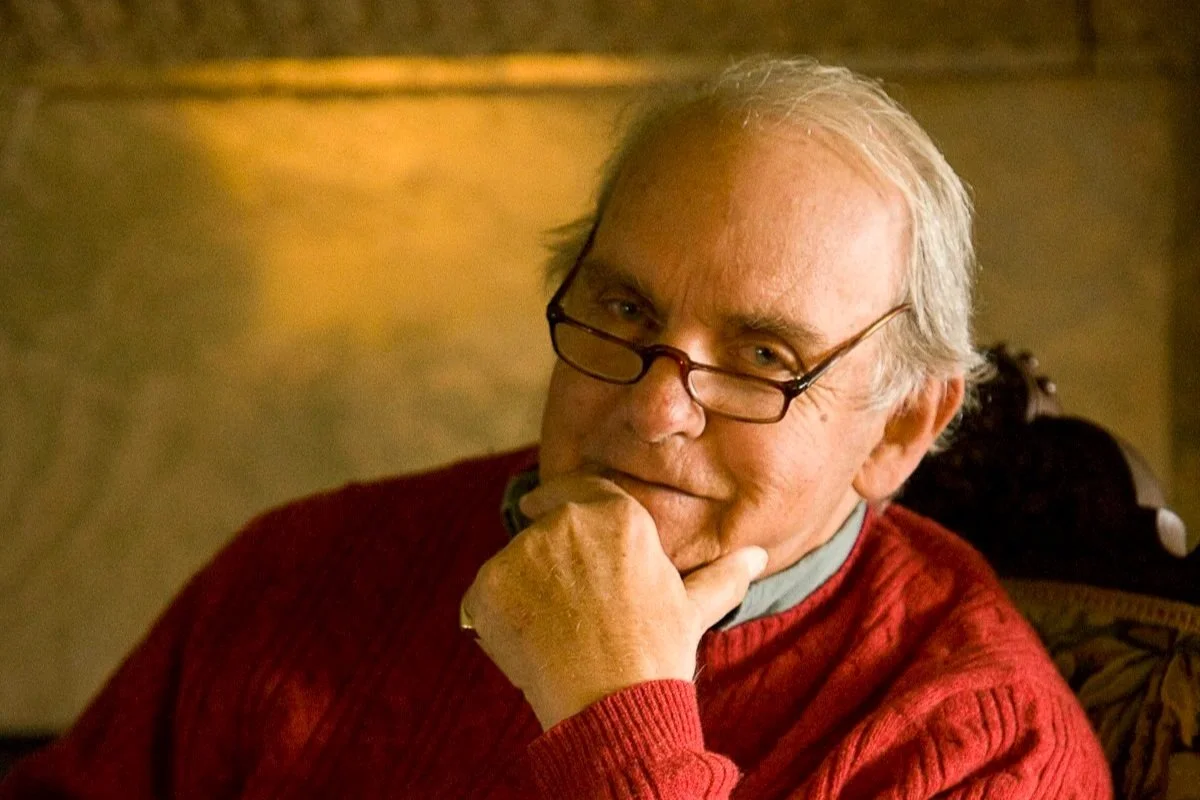
EDITOR’S NOTE: Cogitating over how best to celebrate Frederick Buechner’s 100th birthday, it seemed that the most fitting way to mark the occasion was to hear from you — his readers. This decided, several months ago we wrote to our subscribers, inviting reflections on the following prompt: “What Buechner means to me”.
The response was overwhelming — cumulatively, the word count of a short novel. On behalf of everyone here at the Review, I wish to take this opportunity to thank all those who took the time to write. As editor, I have found myself in a strange position: on the one hand, burdened with the duty of choice; on the other, privileged to read every word — every account of your encounters with Buechner.
These encounters varied greatly in their nature. Some discovered Buechner through his novels, some through his sermons, some through his memoirs. Some taught Buechner in classes and lecture halls and some referenced him in sermons. Some first heard of him in school, seminary, or church; some were gifted a book by a relative or a friend; one individual, as you will read, had a Buechner book literally fall from a shelf into her hand. Some have read his entire oeuvre; some have read one book. Many of you wrote of your gratitude for the Quote of the Day email: a daily place of encounter with Buechner, which, in turn, serves as a means of encounter with others — a devotional material, pored over with other Buechner enthusiasts, and discussed by phone, email, or text.
Among this great variety, I was particularly surprised to learn of two specific kinds of encounter. Many of you wrote with stories of your meetings with Buechner himself. Many more referenced, quoted excerpts, or included in their entirety, letters from Buechner. Such was the number of these personal encounters that, here at the Center, we have decided that something must be done to collect them. Our hope and aim is to address this in the coming year, and I would invite you to keep a lookout for further communications on this matter.
In the meantime, I hope you enjoy reading what follows as much as I did, and that you will continue to join us over the course of this edition as we spend the year celebrating the 100th birthday of the Revd Carl Frederick Buechner: a man of many births, who was first born on Sunday (of all days), July 11, 1926.
DR ANDREW J. NEWELL
Editor, The Buechner Review
Marilyn, Swansboro, North Carolina, USA
The Sacred Journey literally fell into my hands from the library shelf at a retreat center in the winter of 1989. I had never heard of this author, but I devoured the book. Buechner had dedicated it to Louis Patrick who was the minister in Charlotte who married us. Somehow, that made the words especially meaningful and hope-filled, since my marriage had recently ended, and I was struggling to find my way. I wrote to Frederick Buechner with no expectation of a reply, and I asked a simple question: How do we know whether good things in our lives are by God’s grace or just plain luck? Much to my surprise, he responded on August 3rd, with a beautiful letter in answer to my question:
We can never know for sure, I guess, but as I look back on my life and see a whole string of such good things all apparently leading in more or less the same direction, or saying more or less the same thing, I find it almost harder to believe that they are merely lucky breaks than that they are whispers from the wings.
I framed the letter and it hangs in my home. When I read those fading words, as I often do, I am reminded that whatever challenges may come, those whispers from the wings continue to lift, guide, hold. Life can indeed go on in beautiful ways even during such times because we are in the hands of the One who loves and accompanies us on our journeys.
Bruce, Buffalo, New York, USA
I was a student at Phillips Exeter Academy when I first encountered Buechner as our School Minister. While I never was in his classroom, hearing him preach initiated a relationship of more than sixty years. I, also, went on from Exeter to attend both Princeton University and Union Theological Seminary. Then, I spent ten years serving a church in East Harlem, where Buechner worked while attending Union. It was in East Harlem that I began reading and experiencing him as a teacher and spiritual guide. By reminding me and so many that our journeys were sacred and that God loves each of us ‘lost or found or any whichway’,[1] his writing has profoundly impacted my ministry and my life. When I visited him at his Vermont home, I was struck by his hospitality, honesty, openness and vulnerability. As a fellow introvert with a deep appreciation for the blessings of life in northern New England and a sense of the sacred in my own journey, I left that day with an appreciation for how much we had in common and how different our lives had been. In Buechner’s somewhat cluttered yet very comfortable study I noticed the license plate on a bookshelf behind his desk that he referenced in his writing. Since that meeting with him, I have done what I can to follow the message on the license plate by trusting the goodness and guidance of the God who loves each of us as if there was only one of us to love.
Margaret, Boston, Massachusetts, USA
In 2020, I was approached by a relative stranger — one of Frederick Buechner’s daughters (of all people) — who offered me an unexpected invitation: Might I, the enthusiastic acolyte, be interested in meeting her father at his home? To be with my spiritual sage was a gift beyond measure. His brilliant mind had moved to a precious place of “elsewhere” and thus the words spoken between us were few, but in his luminous eyes, I saw his searching for connection, trying mightily to summon up les mots juste. The teacher was trying to coalesce meaningful words to dispense to the student in front of him. Taking a “leap of faith”, I leaned in closely and asked Revd Buechner if he might pray with me or for me. Quietly, he uttered only this: “You have a wonderful face. They don’t grow on trees.”
Cari, Tacoma, Washington, USA
For more than forty years, I began nearly every English class with what my students came to know as our “Buechner Moment”. Long before attendance was taken or homework discussed, the words of Frederick Buechner entered the room. I would take an excerpt from one of his works and share. I wanted my students to understand that language could do more than inform; it could awaken and create connection. But perhaps the most meaningful “Buechner classroom” I ever shared was with my daughter, Kate. From 2011 to 2015, while she was away at college, we created our own daily ritual. Each morning we received Buechner’s “Quote of the Day” by email, and sometime before the day ended, we exchanged reflections on what his words meant to us. Buechner gave us a language through which we could speak honestly about longing, grace, beauty, fear, and faith. Across the distance, his words became a meeting place. Frederick Buechner created connections — between teacher and student, mother and daughter, soul and soul.
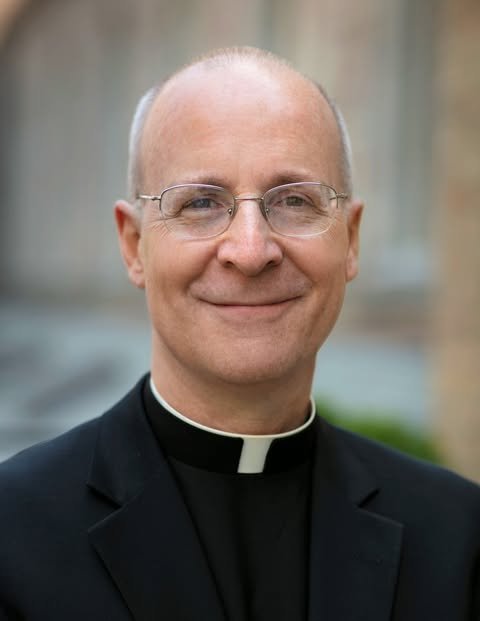
I love all of Frederick Buechner’s writings, and can single out no one volume, or essay, or quote, because they are all so meaningful to me. But when I think of his writing, I think of the word “quiet”. His writing is quiet to me: limpid, beautiful, silent as a pond in summer. And as restful to me.
— Fr James Martin, SJ
Ruth, Madison, Georgia, USA
For almost two decades, my dear friends Anne, Julie, and I have received Frederick Buechner’s Quote of the Day emails. His words have been a place for us to meet on so many mornings of our lives. We read them through the years that we shuffled kids around and raised our families. Those same words landed differently, and more tenderly, as we entered the empty nest years, and now they resonate as the voices of our grandbabies echo in our hearts. Buechner’s writing gave us a place to ponder life in the quiet of early mornings, before our days filled with the business of living. His theme of the day would often connect to what we were studying in the Bible, as if God was weaving together something He wanted us to know on that particular day. Buechner takes a single word and makes us think about it in ways we have never before considered. Sometimes his message makes us squirm, which invariably means that this is something we need to think about. Through him, we have learned to see God, not just in the big things, or in seasons of crisis, but in the smallest details of our days. Buechner encouraged us to seek God without grand explanations or expectations, but with simple gratitude for his love and mercy.
James, Wakefield, Rhode Island, USA
When I was a seminary student, a friend casually handed me The Alphabet of Grace. I opened it and heard a voice I had never heard in the classroom. Here was a man writing about an ordinary morning of breakfast with children or the city street outside his window as if it were scripture. For Buechner, it was scripture. He was not explaining faith so much as noticing it. He paid attention to the world with a reverence I thought was reserved for ancient texts. The alphabet of grace, he insisted, was written everywhere, if you had eyes to see it. That was the window he opened for me, the window between everyday life and faith. He showed me that an ordinary, unremarkable, grocery-list life was itself a kind of holy text. I spent decades in the church, eventually becoming a bishop, bearing the responsibilities of the institution and its associated doctrines. Yet beneath it all, the voice I first heard at twenty-three continued to sustain me. Buechner’s writings over the years encouraged me to listen intently, be vulnerable, and embrace the beauty of the broken.
Christina, St Andrews, Scotland
I first encountered Frederick Buechner on a July morning, while sitting in the Victorian dining room table at the English L’Abri. As we finished our breakfast and slowly sipped our tea, Dawn Merz read aloud the introductory pages of Telling the Truth: The Gospel as Tragedy, Comedy, and Fairy-Tale, in which Buechner acknowledges the paradox of saint and sinner and celebrates the Gospel as tragedy and comedy and fairy-tale. Upon returning to Washington, D.C. later that summer, I bought myself a copy of Telling the Truth and nestled into the yellow hand-me-down sofa in my apartment near Georgetown University. I read the book in two sittings — and there was evening and there was morning, and a new day dawned in my soul. Our lives are changed not so much by whole books as by paragraphs, sentences, and particular turns of phrase — perhaps even by a single conjunction. It was Buechner’s “and” that enthralled me then and that continues to resonate with me now. Throughout his fiction and nonfiction alike, Buechner addresses the profound paradoxes that mark our humanity and human experience; in the face of each constitutive tension, Buechner heartily declares “and” rather than “or” or “but.” He holds together humanity’s glory and ruin, sin and grace, saint and sinner, the sacred and the profane, the ordinary and the extraordinary, childhood and adulthood, tears and laughter, faith and doubt, divine presence and divine absence, chaos and providence, truth and falsehood, wisdom and folly, tragedy and comedy and fairy tale. By holding these surprising and even scandalous tensions, Buechner shocks us awake to ‘the wildness of truth’[2] and the wonder of what it is to be human in the present age, with an eye toward the eschaton. Buechner’s holy “and” was on my mind when Professor Judith Wolfe came to teach a summer course on eschatology at Regent College. “You, too?” I whispered under my breath, as she admitted, “I have a morbid fascination with constitutive tensions”. As we discussed the tensions, ambiguities, and paradoxes we experience in the present age, Judith spoke of how an apophatic and yet hopeful Christian eschatology strengthens us to inhabit and bear such tensions well — neither attempting to resolve them prematurely, nor despairing of their eschatological resolution. I hardly could have anticipated that six years after my first encounter with Buechner, and two years after that C. S. Lewis-worthy “you, too?” connection, I would move overseas to begin PhD study on paradox and eschatology in Buechner’s fiction, under the supervision of Judith Wolfe in the Institute for Theology, Imagination, and the Arts at the University of St Andrews. And yet, here I am, living amidst the ruins of castle and cathedral on the edge of the North Sea, studying how Buechner’s eschatological holy “and” sets before us a way to live well amidst the constitutive tensions of the present age, amongst the communion of saints — unsaintly saints like Godric, Brendan, and Jacob not the least.
Mark, Wenham, Massachusetts, USA
Godric is one of my pinnacle books. I read it on the long trains from Lancaster, PA, to my college north of Boston in the mid-80s. Its iambs moved with the train. My dad had recommended it to me. He was right. Then he suggested I adapt it for the stage. So, I wrote to Frederick Buechner and asked permission to do this, which he granted. One spring break, a troupe of us from the school took the play into churches along the seaboard — free of charge, the congregants who showed up took us home and gave us a bed and breakfast. Audiences loved it; some high school kids decided to come to our college after seeing it. A decade later, a chum of mine who was a reporter for the Boston Herald found on his desk an advance copy of a Buechner book, waiting to be reviewed. He contacted Buechner, and soon thereafter he and I drove out to his place in southwestern Vermont. We had a lovely time with him in an outbuilding he had converted to a writing studio, and he handed me a heart-shaped stone he’d found on the Isle of Farne, and which mattered in Godric. A life highlight.
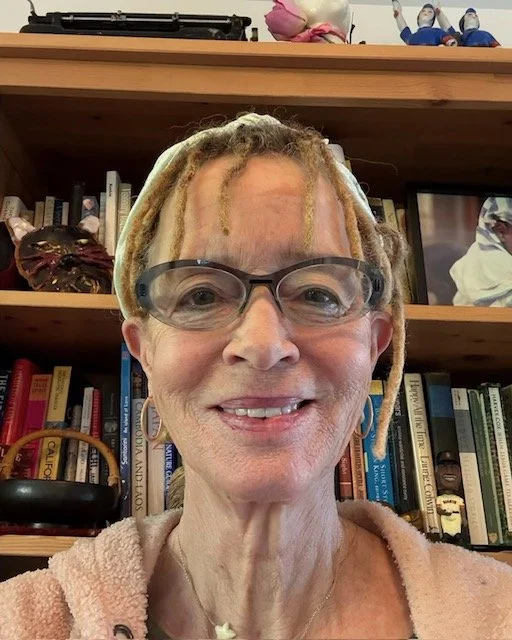
Fred first entered my life during the darkest days, the last year of my drinking and using in 1985. His brilliant theology caught my attention, of course, but it was his loving, welcoming and deeply human spirit that drew me into a lifelong love for the man.
—Anne Lamott
Galen, Omaha, Nebraska, USA
Through seeing the deeper meaning in Buechner’s writing, I’ve learned to see the deeper meaning of many things in most of my days. I’m learning not to just gloss over the days and hours but to actually live in them.
Mel, Evanston, Illinois, USA
In the months after my wife died on March 6, 2015, I bought six books by Frederick Buechner. Each one was like a hand in the water reaching out to a drowning man. Buechner took me into my grief, as a therapist might, but he also did something possibly more important. The hundreds of passages I underlined and scores of marginal notes I made in those books reveal to me just how much Buechner was also taking me away from my grief and engaging me with life again. The search for home. The quest for God. The intricacies of human relationships. The binding of family. The nature of reality. So, on September 26, 2015, I joined the Frederick Buechner Club. From that day to this, I have been receiving a quote from his works each day (and two on Mondays). A quick multiplication tells me I have received 4,000 such daily quotes. Those that touched me the most I copied into my own personal Frederick Buechner Daybook. It now runs to more than 400 pages, each passage another hand in the water.
Stan, Esmeraldas, Ecuador
I am a Trappist monk. I began reading Buechner around 1990 and have continued to this day. I have read almost his entire corpus, several more than once. He is absolutely fascinating for me and so helpful in the spiritual journey on which we all are engaged. Godric captures the essence of the monastic experience, and I have recommended it many times to anyone desirous of learning what monasticism is all about. I still feel this way after sixty-six years of living the monastic life.
John, Leeds, West Yorkshire, UK
Struggling with loss while working far from home in Paraguay — including the death of both my parents in childhood, one to suicide — I wrote to Frederick Buechner sharing my story and thanking him for the help I was finding in his writings. In his reply he wrote: ‘[Your letter] moved me very deeply and the first thing I found myself doing, here at my desk on a raw fall afternoon, was to pray, as you asked, for you and your wife and children that God surround and indwell you all with his peace and love. And I pray that now again.’ The letter continued, ‘What an extraordinarily long shadow those long ago deaths continue to cast. My father died over 1/2 a century ago, and hardly a day goes by without my looking somehow…in his direction. So I know something of your sadness, and your saying that my books have in some measure helped you with it means a very great deal to me.’
Sharon, Nashville, Tennessee, USA
In 1973, I was at a crossroads in my vocation. My Dad gave me the book Wishful Thinking: a seeker’s ABC. I came upon Buechner’s words: ‘The kind of work that God calls you to is the kind of work (a) that you need most to do and (b) that the world most needs to have done’.[3] It was the turning point. I no longer doubted my calling. I went on to have a meaningful career as a Professor at Peabody College of Vanderbilt University for fifty years. I have shared his writings with hundreds of students, many of whom have gone on to share them, too. I close with deep gratitude for the life of Frederick Buechner and his gifts to all of us.
Gary, Wheaton, Illinois, USA
I was originally introduced to Frederick Buechner as a student at Wheaton College in 1976 by my Economics professor, Bob Bartel, who would start class by reading something important and unrelated to economics. Often, he would read passages from a Buechner book. I say and believe things differently because of Buechner. He taught me to remember the dearly departed and talk about them even when it's not comfortable. He helped me work through my daughter's eating disorder. She just happened to be born on the same day as Frederick Buechner, July 11th. I travelled to Vermont on a Sunday from our summer cabin in Woodstock, CT some twenty years ago to attend the Rupert Congregational Church, hoping that I might see him. On this particular Sunday he was not there, but I was told that if I'd like to say hello, he lived nearby. So, I wandered down the road, found the house, and saw some people doing yard work. I introduced myself to Frederick's wife and another family member (I think a son-in-law), and asked if it might be possible to say hello and thank him for the significant impact he'd had on my life. "Let me check", she said, coming back a few minutes later with the announcement that "he'd be happy to see you". He couldn't have been more pleasant or cordial. When I asked him about his church attendance, he just smiled and said something to the effect that the messages often lacked joy and hope, and that is mostly what we need to hear. I didn't take a picture, I didn't get his signature, nor did he give me one of his books, but I left with something much more — the very real sense that God had used this man as an instrument of his grace and love for good in this world.
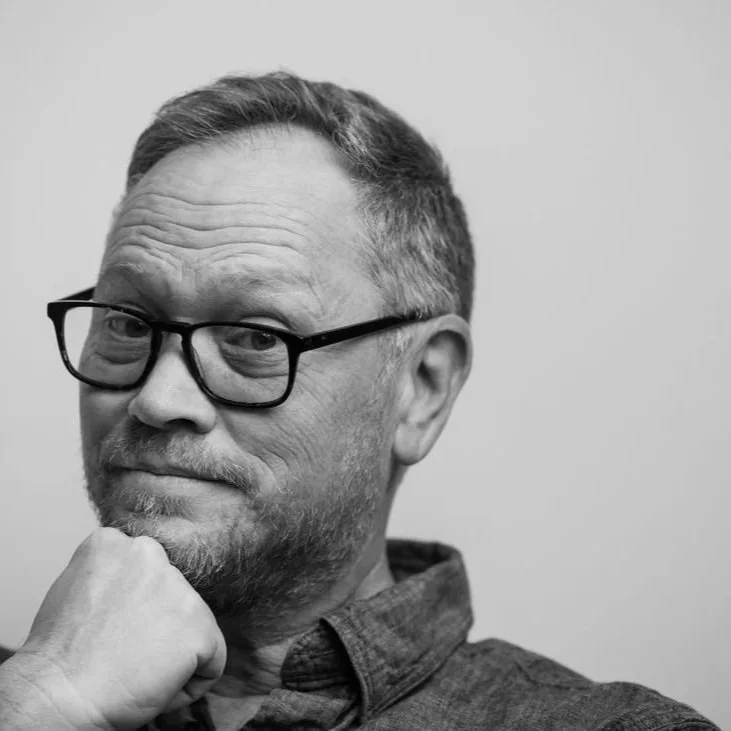
Buechner taught us to pay attention to the mystery of our lives in order to see God’s grace at work. When I look back on my life so far it’s clear that one of God’s many graces to me was Buechner himself, who wrote about plenty of light, but was also brave enough to delve, trusting that even in the depths, God could be found. Frederick Buechner’s writing has been for me a hand in the dark, leading to Jesus.
— Andrew Peterson
Sharlin, Leo, Indiana, USA
Buechner speaks my soul to me. He writes what is real without any sense that he needs to make it more palatable, and then he leaves me with a deeper sense of hope and beauty than when I started. This is no cheap hope or made-up beauty. It is fearless and sturdy, forged through patient persistence as life and truth are allowed to unfold. On the day I read The Alphabet of Grace, he returned to me a piece of my shattered heart.
James, Suffolk, Virginia, USA
There are some writers you read, and then there are some writers who read you. For me, Frederick Buechner belongs to the latter category. His words did not merely inform my theology; they interrupted my soul. They challenged me to slow down, to pay attention, and perhaps most importantly, to listen to my life. The first time I encountered Buechner, I was in a season of exhaustion, responsibility, and deep reflection. Like many pastors, leaders, and scholars, I had become consumed with the demands of ministry, leadership, deadlines, and expectations. Somewhere in the midst of all the noise, I came across Buechner’s now-famous line from Now and Then: ‘Listen to your life. See it for the fathomless mystery that it is’.[4] That sentence stopped me in my tracks. It was not merely inspirational; it was revelatory. It felt as if someone had finally given me permission to see my own experiences, wounds, memories, failures, and joys as sacred texts worthy of theological reflection. Buechner helped me understand that God often speaks through the ordinary, and he taught me that storytelling itself could become a form of ministry. Before reading Buechner, I often approached preaching primarily as proclamation. After reading him, I began to understand preaching as confession, vulnerability, testimony, and sacred conversation as well. His influence dramatically reshaped my devotional style and the tone of my preaching. Buechner showed me that sermons do not always need to shout to speak powerfully. Sometimes the deepest truths emerge through honesty, tenderness, humor, memory, and reflection. As an African American Baptist preacher formed within prophetic traditions filled with celebration, cadence, and power, Buechner introduced me to another dimension of preaching: the ministry of quiet depth. He taught me how to sit with mystery instead of always rushing to resolve it.
Heather, Cold Lake, Alberta, Canada
Buechner demonstrated, in both his fiction and non-fiction work, what it meant to experience the fullness of restoration. Grace fierce enough to break into the messy spaces that we try to hide from. Mercy strong enough to permeate the mundane practicalities of daily life. Hope that offsets the most tragic circumstances. Love that overcomes the relentless inevitability of heartbreak. Buechner exposes redemption as more than the salvation of souls — Christ is the saviour of all that makes up a human life.
Stephen, Eden Prairie, Minnesota, USA
I first met Frederick Buechner in an English literature senior seminar at Bethel University (MN) in 1985. The book was Love Feast, a rather strange fictional piece written by a ‘pastor’. I must admit, there was some head scratching reading about the debauched Leo Bebb. My deeper entrée to Buechner, a year later, was in Wishful Thinking, a gift book from a former college roommate. Here, I encountered the enlightened wit of the crew-neck-sweatered sage. The summa aphorism was: ‘The place God calls you to is the place where your deep gladness and the world’s hunger meet’.[5] Vocation, joy, connection, gifting. A blessing of the benefactor to the impoverished; bounty to the empty. Revd Buechner and I exchanged letters for a brief season. The pastor’s pen reached consoled a hurting heart. The letters are gone, but I will always remember a hand from the shore helping a swimmer to land. Rest in Peace and thank you, Frederick Buechner. Your words resound more than ever in our famished world.
Charlotte, Chesterton, Indiana, USA
There was a time, not so very long ago, that I was in a period of estrangement from God, a spiritual homelessness, during which I could not even pray. And then, one day, I was re-reading The Clown in the Belfry and was struck by this wonderful quote:
Faith is homesickness. Faith is a lump in the throat. Faith is less a position on than a movement toward, less a sure thing than a hunch. Faith is waiting. Faith is a journeying through space and through time.[6]
It helped me to recognize that this feeling that I sometimes had, this choke in my heart, this deep longing I barely dared to confess, was no mere nostalgic sentimentality, no longing for a distant past, but the deepest expression of faith I could ever profess. It was the longing for relationship with God even when my rational self suggested that this was no longer possible. It was a surrender of all my questions and my need for certainty in order to learn to trust. It was my soul crying out, "Lord, I believe — help my unbelief". It was my yearning for home. I prayed with this quote every day for months as I found my way back home to my Catholic faith. Buechner's insights into the spiritual life are so keen that they transcend denominational boundaries and speak to the heart of anyone who is sincerely seeking to live the life of faith, a life that journeys towards God.
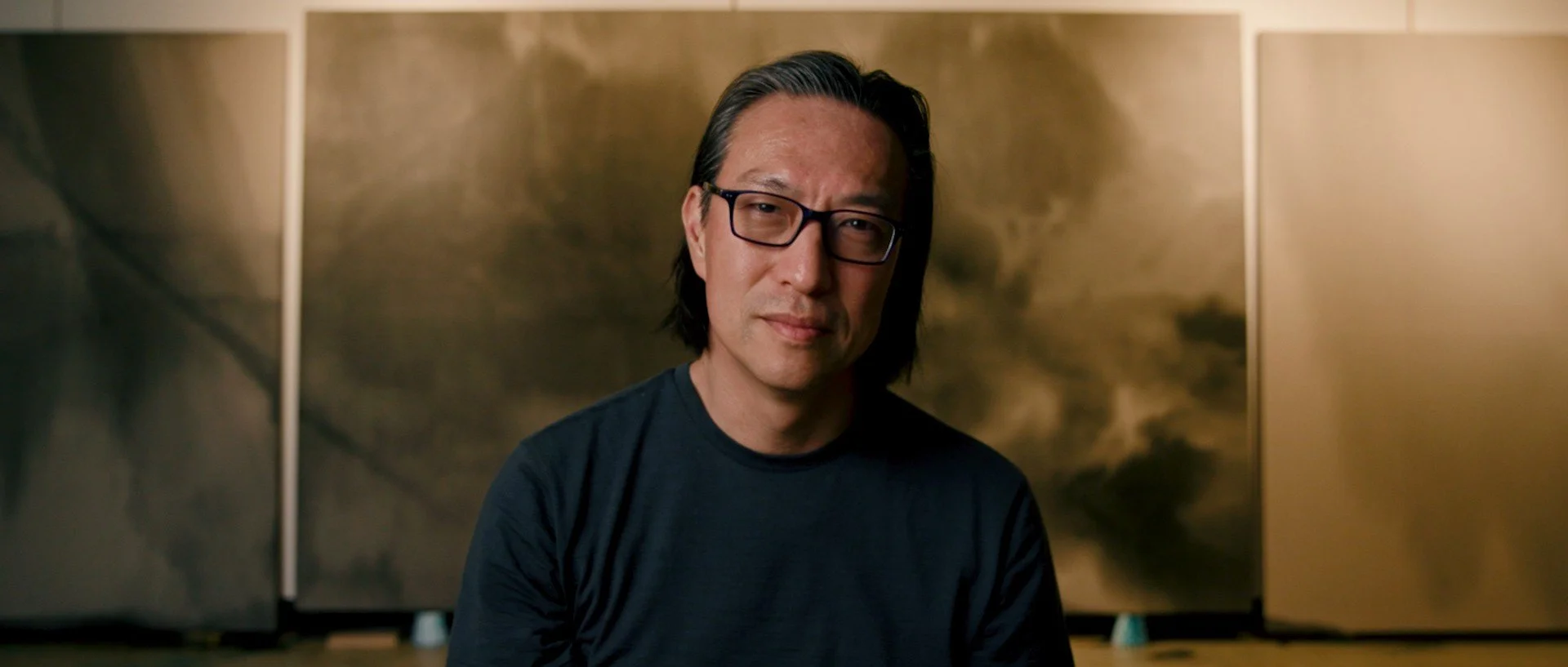
As with all great artists, Buechner’s influence grows deeper over time. His words are roots by a stream, growing into the soil of the particularity of his town; they are “Our Town” now. His luminous words amplify our deep longings for home and have become a lamppost of grace in a harsh, fractured world.
— Makoto Fujimura
Tom, Spartanburg, South Carolina, USA
Frederick Buechner and I were occasional pen pals, dating to 1979. I heard from him about as often as Abram heard from God, but each letter I got — in that tortured, felt-tipped scrawl that required real time and, sometimes, the assistance of a couple of friends to translate — was almost theophanic. In my retirement office I have a monstrance, a reliquary, in which I keep the letters I received. The first arrived when I was in seminary and as lost as a soul might be. My life was in ruins, its pattern as indecipherable as the Hebrew I was unable even to see on the page as writing, much less translate it. I was in absolute, abject, potentially self-destructive misery. And then I discovered The Alphabet of Grace. Or it discovered me. I took it with me to the bathtub. I read it through, twice. I emerged as if from a womb, or from baptism. I was all right. I knew of nothing other to do than to shoot an arrow into the dark: to write him by way of Seabury Press. A fortnight later I would receive two handwritten (and almost illegible) pages. He told me the TRUST story we would all read later, but in that moment, it was as personal and potent a word as, when he stopped on the side of the road for lack of a route or destination, the banker’s license plate had been for him. That book saved my life. Literally. And my ministry. And made me both love and want to be Frederick Buechner, in hopes of someday invoking healing grace for other hurting souls. In Decatur, I heard him deliver The Sacred Journey. I spent time with him (he was working crosswords) and asked if he would sign all his books. I had highlighted almost every word: ‘For Tom, underliner extraordinaire’, he painted in The Magnificent Defeat, ‘from his underlined friend, Fred’.
Billy, Pawleys Island, South Carolina, USA
Thank the Lord for Frederick Buechner, whose congregation was us.
Thank you for reading this special birthday edition of The Buechner Review. Should you wish to join the celebrations on your own social media pages by sharing a tribute to Buechner with the world, we would encourage you to do so beneath the hashtag: #fb100.
If you would like to receive future articles in your email inbox you can sign up here.
Works cited:
[1] Frederick Buechner, Love Feast (New York: Atheneum, 1974), p.61.
[2] Frederick Buechner, The Alphabet of Grace (New York: Phoenix Press, 1970), p.127.
[3] Frederick Buechner, Wishful Thinking: a theological ABC (New York: Harper & Row, 1973), p.95.
[4] Frederick Buechner, Now and Then: a memoir of vocation (New York: HarperCollins, 1983), p.87.
[5] Buechner, Wishful Thinking, p.95.
[6] Frederick Buechner, The Clown in the Belfry: writings on faith and fiction (New York: HarperCollins), p.12.
Sign up here to receive articles in your inbox
